P3 LED display color uniformity checklist matters for venue owners, integrators, and buyers using this P3 LED display color uniformity checklist because color uniformity decisions require grayscale content, white-point checks, module batch notes, calibration records, viewing conditions, and a final acceptance check. The useful answer begins with the exact situation, not with a broad claim that could fit any page.
The first pass should compare grayscale test, white point, and module batch. Those checks keep P3 LED display color uniformity checklist grounded in something a reader can verify, repeat, or discuss with another person.

Quick Answer
A P3 LED display color uniformity checklist should start with grayscale and white-point test content, module batch notes, calibration records, viewing distance, ambient light, and a final acceptance record.
For P3 LED display color uniformity checklist, the safest approach is to compare the main facts, test one concrete example, and stop before judging color by one photo turns a useful answer into a weaker one.
Basic Facts
P3 LED display color uniformity checklist: Start with test content
Start with grayscale content and record visible color shifts, white balance, cabinet position, and viewing distance. The checkpoint here is grayscale test, supported by a grayscale test photo.
Compare module batch labels and calibration records before judging a color difference as a display defect. Compare white point with module batch before replacing a component.
Review brightness, white point, and real content after the wall is stable because a powered display can still fail acceptance. Avoid judging color by one photo; it weakens diagnosis and acceptance evidence.
Photograph color patch output, module label position, controller values, and real content playback so the review has dated evidence. For P3 LED display color uniformity checklist, keep this boundary: Use this as installation preparation; final work still depends on site structure, electrical conditions, installer qualification, and integrator review.

Check Module Batch, Calibration, and Viewing Conditions
Review brightness, white point, and real content after the wall is stable because a powered display can still fail acceptance. The checkpoint here is white point, supported by a white point comparison.
Photograph color patch output, module label position, controller values, and real content playback so the review has dated evidence. Compare module batch with viewing condition before replacing a component.
Separate installer safety checks from buyer acceptance notes because both are needed before handoff. Avoid ignoring module batch differences; it weakens diagnosis and acceptance evidence.
Use a sample content loop with grayscale, solid color, text, motion, and brand color before treating the wall as accepted. For P3 LED display color uniformity checklist, keep this boundary: Use this as installation preparation; final work still depends on site structure, electrical conditions, installer qualification, and integrator review.
Review White Point, Grayscale, and Real Content
Separate installer safety checks from buyer acceptance notes because both are needed before handoff. The checkpoint here is module batch, supported by a module batch label.
Use a sample content loop with grayscale, solid color, text, motion, and brand color before treating the wall as accepted. Compare viewing condition with calibration record before replacing a component.
Keep the review request specific: cabinet count, module batch, calibration profile, viewing condition, test content, and acceptance notes. Avoid checking only full-brightness content; it weakens diagnosis and acceptance evidence.
Treat this checklist as preparation for integrator review, not as a replacement for structural, electrical, or installation safety design. For P3 LED display color uniformity checklist, keep this boundary: Use this as installation preparation; final work still depends on site structure, electrical conditions, installer qualification, and integrator review.
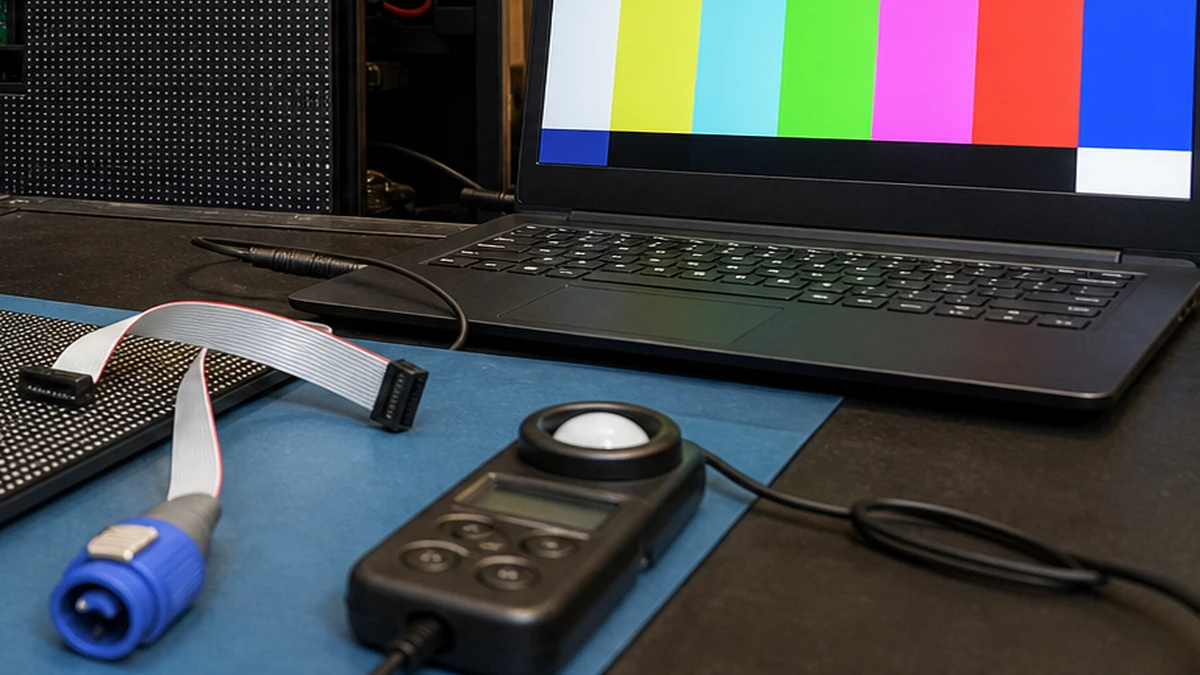
Use Acceptance Evidence Before Sign-Off
Keep the review request specific: cabinet count, module batch, calibration profile, viewing condition, test content, and acceptance notes. The checkpoint here is viewing condition, supported by a real content playback.
Treat this checklist as preparation for integrator review, not as a replacement for structural, electrical, or installation safety design. Compare calibration record with acceptance test before replacing a component.
Start with grayscale content and record visible color shifts, white balance, cabinet position, and viewing distance. Avoid skipping acceptance evidence; it weakens diagnosis and acceptance evidence.
Compare module batch labels and calibration records before judging a color difference as a display defect. For P3 LED display color uniformity checklist, keep this boundary: Use this as installation preparation; final work still depends on site structure, electrical conditions, installer qualification, and integrator review.
A page-specific closing check should confirm module batch, viewing condition, and calibration record while avoiding ignoring module batch differences. Keep the note specific enough that another reader can repeat the check without guessing what evidence was used.
Before applying the advice, compare grayscale test with acceptance test and write down the one result that would change the decision.
A practical example is white point comparison: it should be tested against the reader task, not treated as a universal answer.
The main boundary remains clear: Use this as installation preparation; final work still depends on site structure, electrical conditions, installer qualification, and integrator review.
For P3 LED display color uniformity checklist, keep the final wording close to the reader task and the visible evidence instead of adding a broad summary.
Keep one maintenance record beside the cabinet map: note the symptom, cabinet position, module batch, power and signal observations, assigned owner, and the acceptance result. This lets another technician repeat the diagnosis without relying on memory.
A second inspection should compare the observed fault with the installed controller, receiving-card map, module specification, and spare inventory. If the evidence does not match, stop component replacement and escalate the diagnosis.
Separate visual symptoms, electrical measurements, signal-path evidence, and maintenance history. These evidence layers may point to the same component, but conflicting results should remain documented instead of being forced into one diagnosis.
The closing check should confirm stable content playback, uniform brightness and color, acceptable cabinet temperature, secure connections, and no recurring fault indicators. Record the result before returning the display to service.
When this checklist is used in the field, keep each record short and specific: identify the cabinet, state the symptom, attach the measurement or test pattern, and name the next responsible owner.
If a fault remains uncertain, preserve the evidence and isolate the affected area according to site procedure. Do not install an unverified spare or bypass a safety control merely to restore the wall quickly.
A final record should compare the original symptom, corrective action, and acceptance test. If all three are clear and the safety boundary is satisfied, the maintenance handoff can proceed without guesswork.
For this P3 display, compare the grayscale test, white-point baseline, module batch notes, real content playback, and final acceptance record. Record what changed at each stage because repeatable color review depends on visible test content and calibration evidence rather than guesswork.
Before the final handoff, compare grayscale output, white-point baseline, module batch differences, viewing conditions, and a real content playback sample. If one item is missing, keep the wall under review until a qualified technician confirms the cause and the corrected display performs consistently under normal content.
Quick reference
Use this quick reference for P3 LED display color uniformity checklist: check grayscale test, compare white point, watch for judging color by one photo, and keep the boundary note visible before choosing a next step.
- Best reader: venue owners, integrators, and buyers using this P3 LED display color uniformity checklist
- Strongest evidence check: grayscale test
- Useful example: grayscale test photo
- Boundary: Use this as installation preparation; final work still depends on site structure, electrical conditions, installer qualification, and integrator review.
Frequently Asked Questions
What is the first step in a P3 LED display color uniformity checklist?
Start with the central meaning of P3 LED display color uniformity checklist, then confirm grayscale test and white point before using the answer in a real plan.
Can a buyer use this checklist instead of an installer?
The safest check is module batch. It keeps P3 LED display color uniformity checklist tied to visible evidence instead of a vague impression.
How should module batch differences be checked?
Avoid checking only full-brightness content. That mistake can make P3 LED display color uniformity checklist sound clearer than it really is.
Should white point be checked before accepting a P3 LED display?
Use related site pages when you need examples, tools, or a broader background after reading about P3 LED display color uniformity checklist.
What evidence should a buyer keep before return to service?
Use this as installation preparation; final work still depends on site structure, electrical conditions, installer qualification, and integrator review.