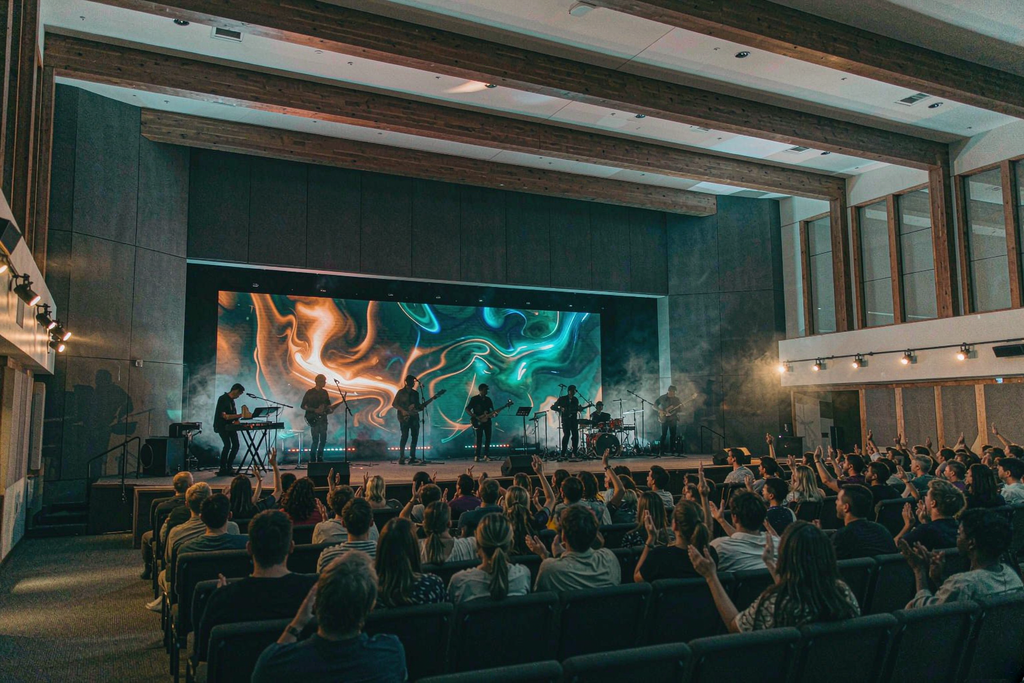
Why More Churches Are Choosing a Church LED Wall in 2026
Across the United States, Europe, and parts of Asia, thousands of churches have moved away from traditional projectors and bulky LCD screens. A church led wall is now one of the most popular upgrades for sanctuaries of every size.
This shift is driven by a simple truth: modern congregations expect a more engaging visual experience. Songs need clear lyrics. Sermons need supporting visuals. Events need a stage backdrop that looks professional. A traditional projector often falls short on brightness, contrast, and lifespan. A church led wall solves these problems with a single, integrated solution. As prices have come down and product quality has improved, even mid-size churches can now afford this kind of upgrade.
Worship leaders, technical directors, and church administrators are all taking notice. Some are replacing aging projectors. Others are building new stages from scratch. In both cases, the goal is the same: use a church led wall to create a visual environment that helps people connect with the message.
1. Brightness That Makes a Church LED Wall Work in Any Lighting
Sunday morning often brings mixed lighting. Sunlight streams through stained glass. Stage lights hit the front row. A standard projector can look washed out under these conditions.
A modern church led wall delivers brightness levels from 800 to 5000 nits, depending on the model. Even in a sunlit sanctuary, the image stays vivid and readable. Worship leaders no longer need to dim the room to see the screen. The congregation can read lyrics, follow along with scripture, and stay engaged without straining their eyes.
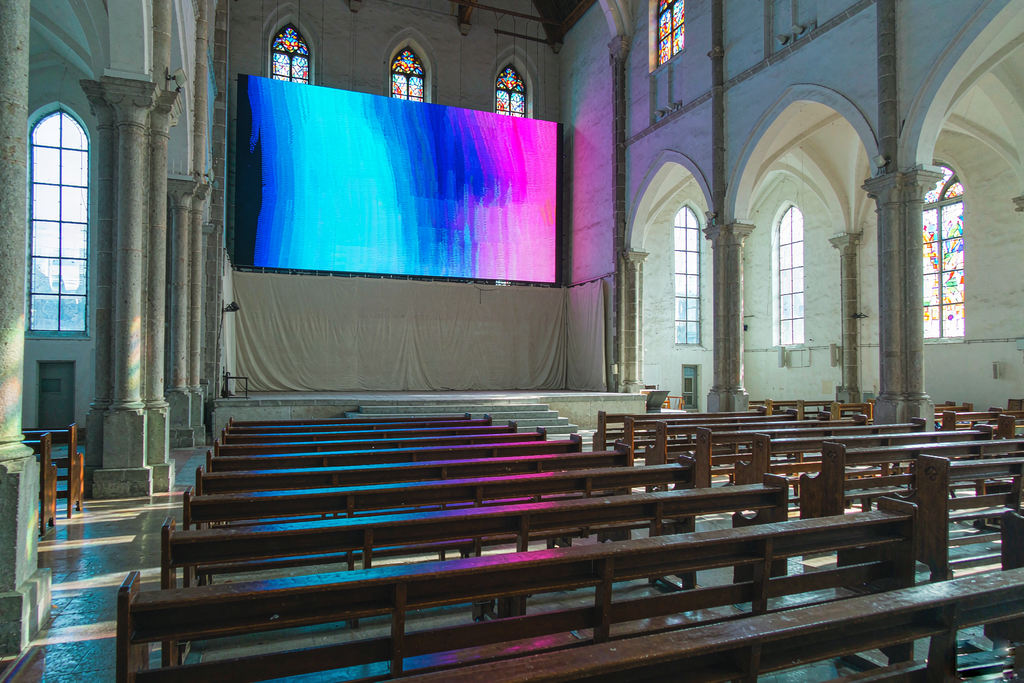
This is especially helpful for churches with lots of windows, skylights, or open-air designs. Projectors simply cannot compete with direct sunlight, but LED walls thrive in those environments.
2. Superior Image Quality at Any Viewing Angle
Projectors lose color and contrast when viewed from the side. The further a seat is from the center, the worse the picture looks. This is a common complaint in wide sanctuaries.
A church led wall maintains consistent color and brightness across viewing angles of 140 degrees or more. Whether someone sits in the front row or the back corner, the image looks the same. This is especially important for balcony seating, side aisles, and overflow rooms where projectors often disappoint.
For multi-site churches that stream services into satellite rooms, this consistency also matters. The image quality in the overflow space matches what people see in the main sanctuary.
3. Seamless Display: How a Church LED Wall Removes Distracting Bezels
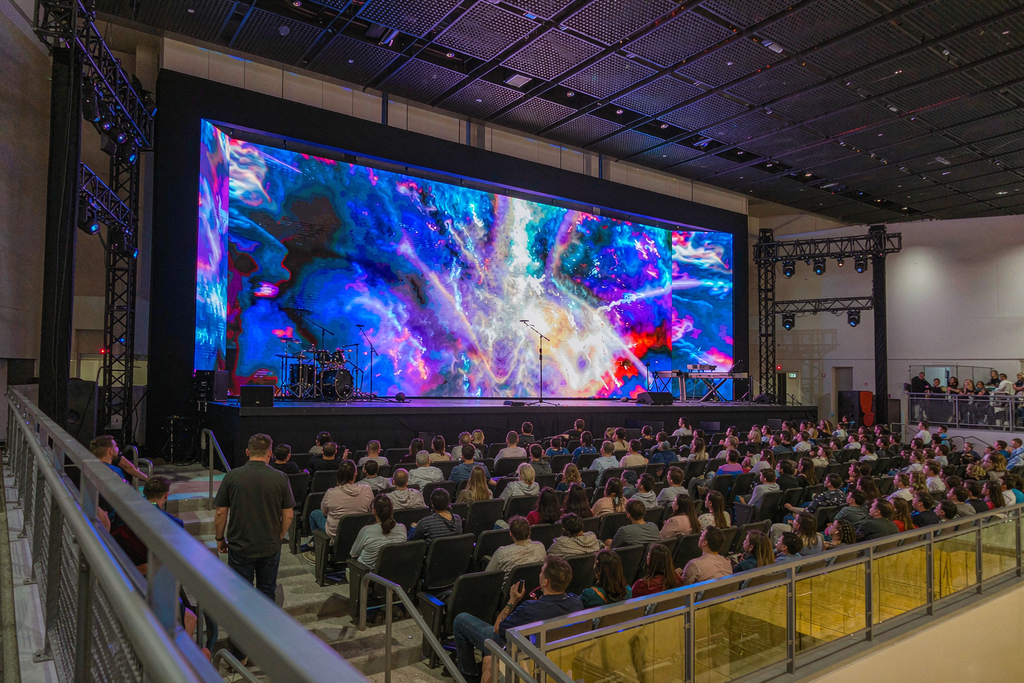
Older video walls used multiple LCD screens stacked together. The thick bezels between screens created distracting black lines across the picture. Lyrics broke in the middle of a word. Videos looked chopped.
A modern church led wall uses panels that join with gaps of less than 1mm. The result is a single, continuous image. Lyrics flow naturally. Videos play without interruption. The visual experience feels polished and professional, even during high-production events like Christmas and Easter services.
For churches that use IMAG (Image Magnification) to display the preacher on screen, the seamless look is even more important. No one wants to see a black line running through the pastor’s face during the sermon.
4. Long Lifespan and Low Maintenance
Projector lamps typically last 2000 to 5000 hours. After that, replacement costs add up quickly. A single lamp can cost several hundred dollars, and replacing it often requires a technician on site. Over 10 years, a church can spend tens of thousands of dollars just on lamp replacements.
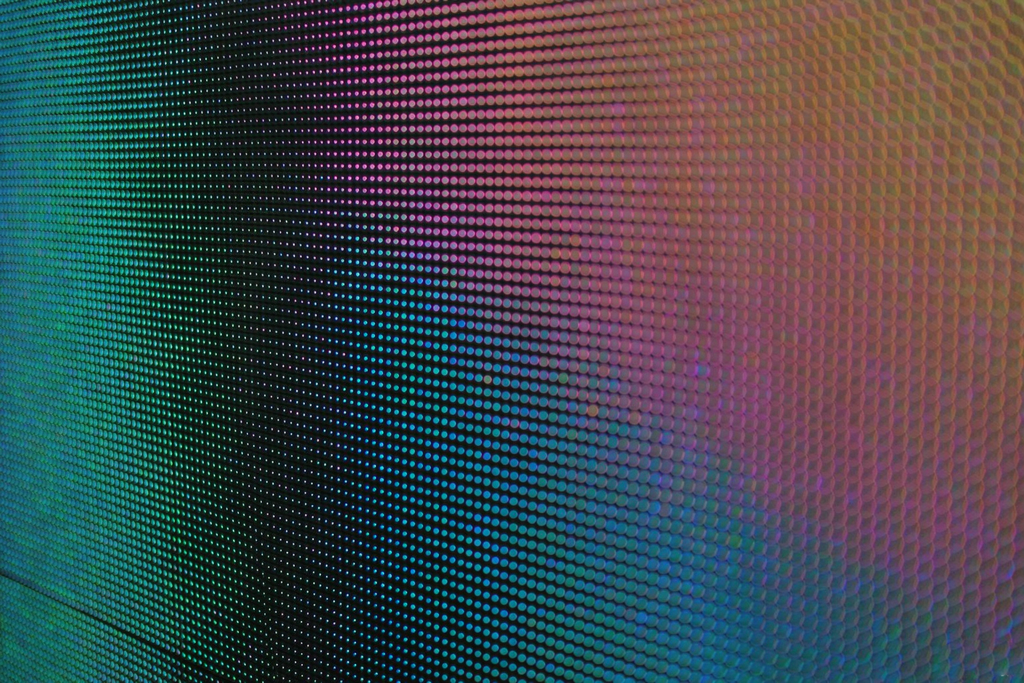
LED panels are rated for 100,000 hours of use. For a church running services three times a week plus midweek events, that is more than 20 years of normal use. There are no lamps to replace. Power consumption is also lower than comparable projectors, which keeps utility bills more predictable for the church budget.
Maintenance is also simpler. Most issues can be fixed by swapping a single panel or module, often in less than 30 minutes. A volunteer tech team can usually handle this without calling in outside help. This is a real benefit for smaller churches that do not have a full-time media staff.
5. Flexible Content That Makes a Church LED Wall Versatile
Modern worship is multi-format. A Sunday morning service might include worship songs, scripture reading, sermon slides, children’s moments, and video announcements. A Wednesday youth night looks completely different. A Christmas production requires cinematic backdrops.
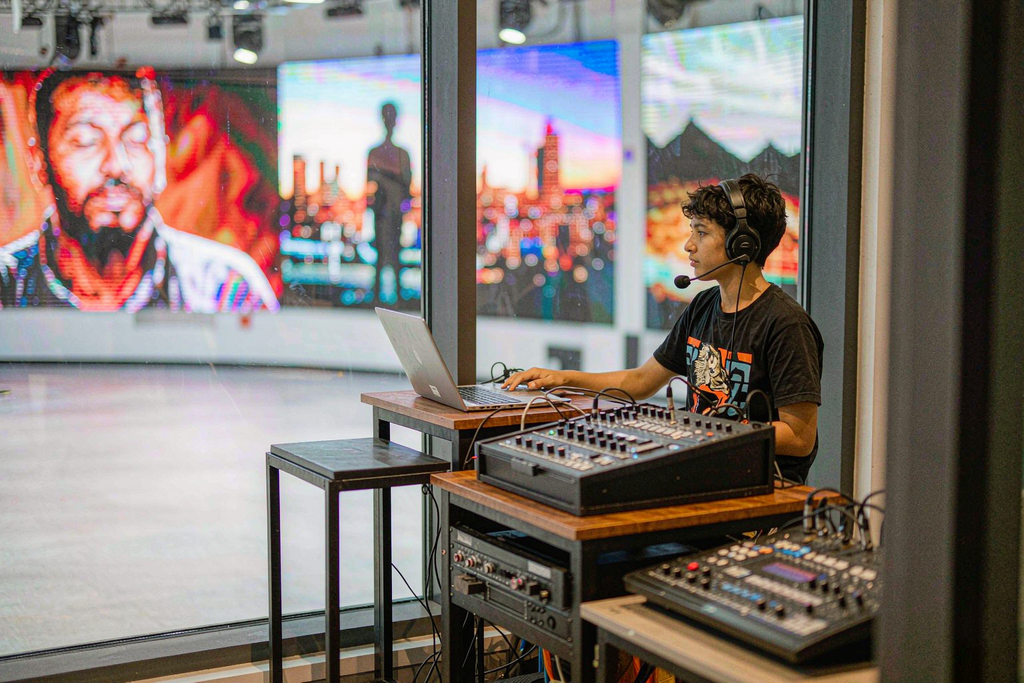
A church led wall handles all of this through a single control system. Operators can switch between PowerPoint, ProPresenter, EasyWorship, video playback, and live camera feeds with a click. The same screen that displays song lyrics in the morning becomes a stage backdrop for a youth drama in the evening.
Cloud-based control platforms are now standard. A volunteer can update the display schedule from home, and the screen picks up the new content automatically when the system comes online.
6. Custom Sizes to Fit Any Sanctuary
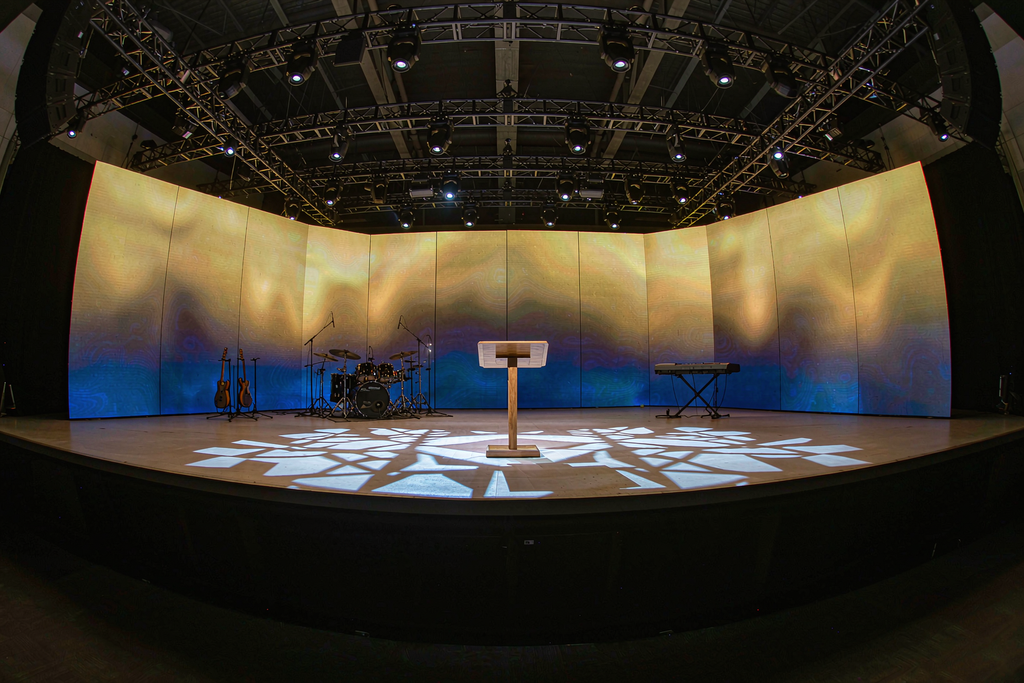
Every church building is different. Some have wide, shallow platforms. Others have narrow, deep stages. Some need a single screen behind the pulpit. Others want a full wraparound or curved backdrop. Older buildings with stone columns, wooden beams, or limited rigging points often require creative installation approaches.
A church led wall comes in standard cabinet sizes but can be combined into almost any shape or dimension. A small church might use a 3-meter wide screen. A large megachurch might build a 12-meter curved backdrop. The technology scales with the room, not the other way around. Pixel pitch can also be selected based on typical viewing distance, which keeps both performance and cost in balance.
Some churches also use portable LED panels for outdoor events, youth retreats, or traveling ministries. The same panels can be reconfigured for each setup, which adds flexibility for ministries that meet in multiple locations or run community events beyond the main sanctuary.
7. Strong ROI: How a Church LED Wall Pays for Itself
Budget is always a concern for ministry. An LED wall is a major investment, but it pays off over time. The lifespan alone (often 10 to 15 years before any major component replacement) makes it more cost-effective than projectors, which need lamp replacements every few years.
Beyond cost savings, a professional visual setup helps churches attract new visitors, retain younger members, and support high-quality live streaming. Many congregations report increased engagement and giving after upgrading their stage visuals. For churches that broadcast services online, the improved camera image also strengthens their digital ministry.
When presented to the church board, the case is often straightforward: lower long-term costs, broader ministry impact, and a visual upgrade that meets modern expectations. This kind of investment is increasingly seen as a strategic tool for ministry, not just a piece of hardware.
Final Thoughts
A church led wall is no longer a luxury reserved for large megachurches. As prices have come down and technology has matured, mid-size and even small churches are making the switch. The benefits are clear: better brightness, longer lifespan, flexible content, and a more engaging worship experience for everyone in the room.
When planning an upgrade, take time to evaluate your sanctuary size, typical content needs, and budget. Work with a supplier who understands the specific demands of church environments, including acoustic considerations, lighting integration, and live streaming workflows. The right partner will guide you through pixel pitch selection, installation logistics, and long-term service plans.
If you want to learn more about the underlying LED display technology, you can read the LED display article on Wikipedia.
To explore church-specific LED wall solutions and see example projects, visit our LED Wall Solutions.