A Practical Guide to Choosing the Right Transparent LED Screen Display
Are you looking for a transparent LED screen display? You are not alone. More businesses are choosing this display technology every year. But picking the right product can feel confusing. This guide makes it simple.
In this article, you will learn 7 key things. These will help you make a smart buying decision.
What Is a Transparent LED Screen Display?
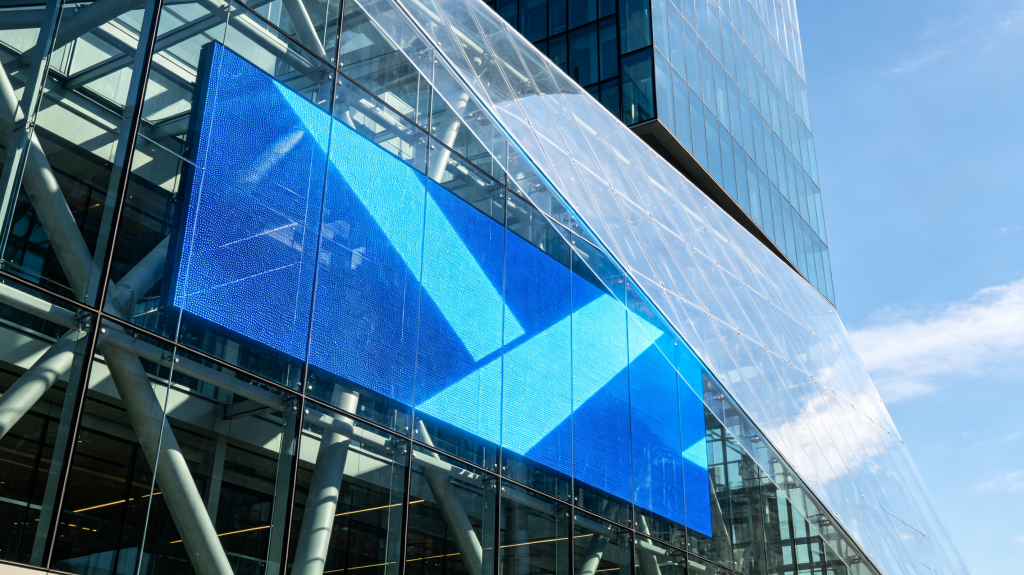
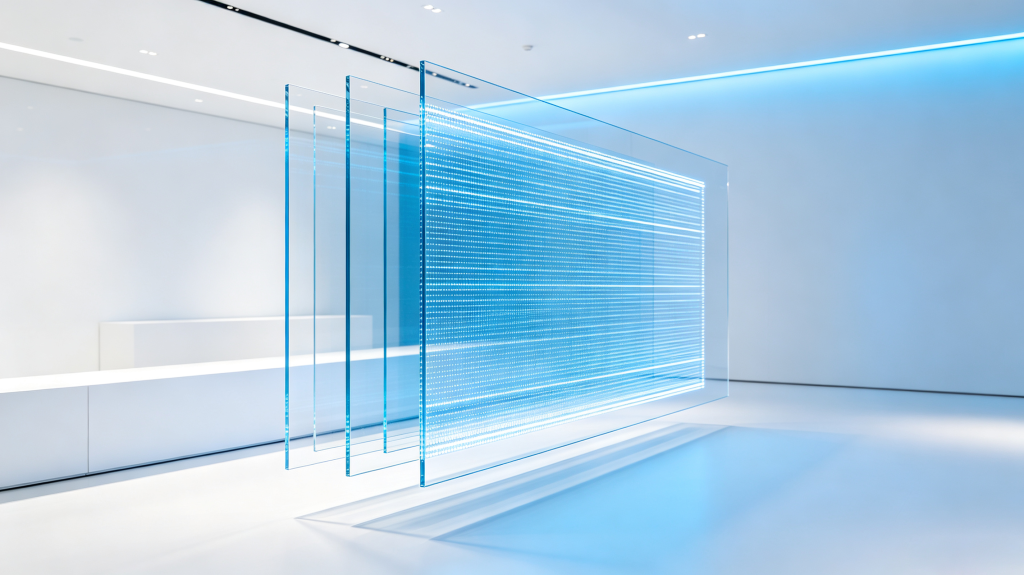
A transparent LED screen display is a display that uses light-emitting diodes. Unlike traditional displays, it allows light to pass through. This creates a see-through effect.
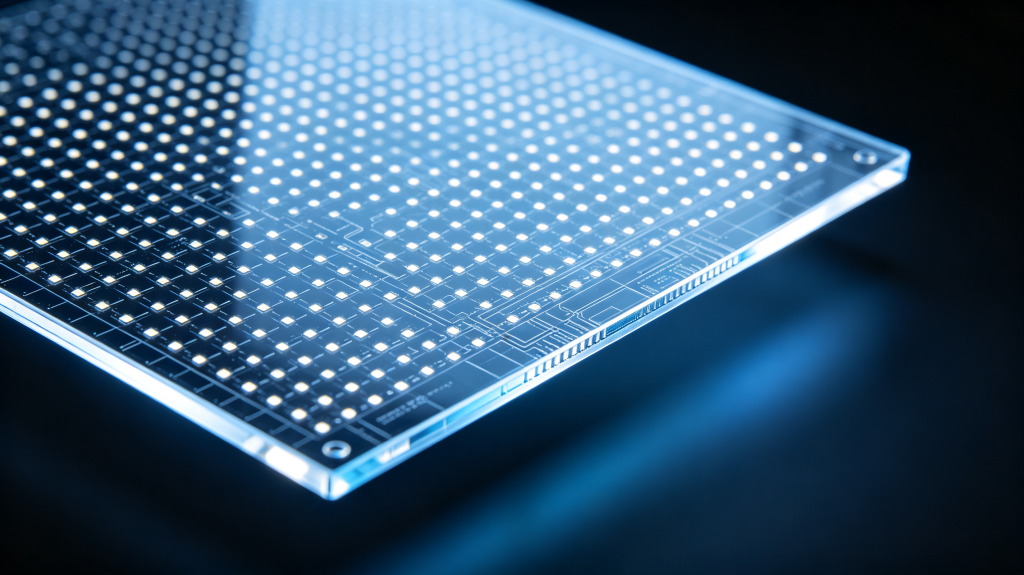
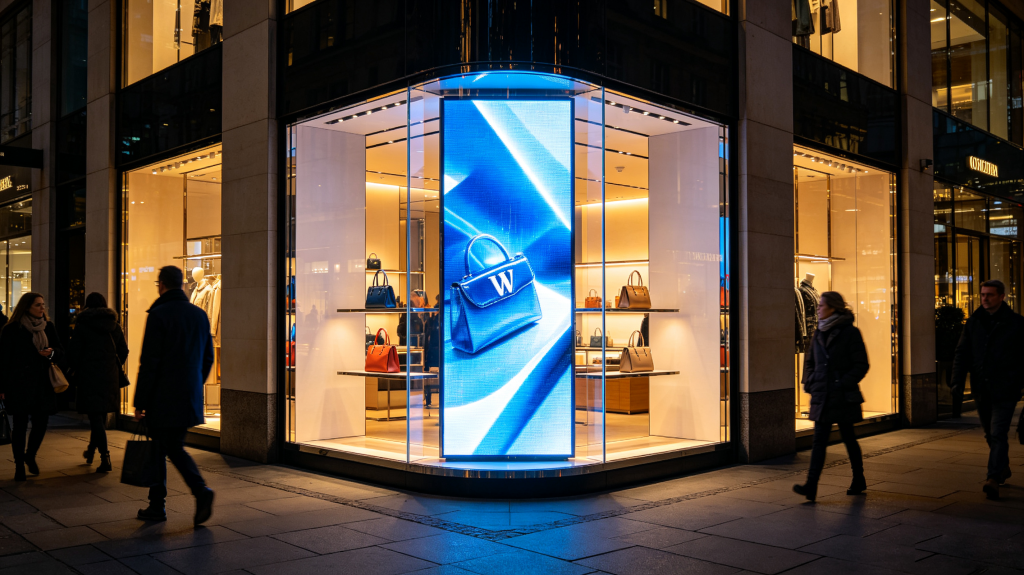
This technology is made of transparent panels. Each panel contains hundreds of LEDs arranged in a grid pattern. The spaces between LEDs remain open. This lets shoppers see through the display while watching vivid content. It is a game-changer for retail advertising.
7 Key Things About Transparent LED Screen Display Before Buying
Pixel Pitch
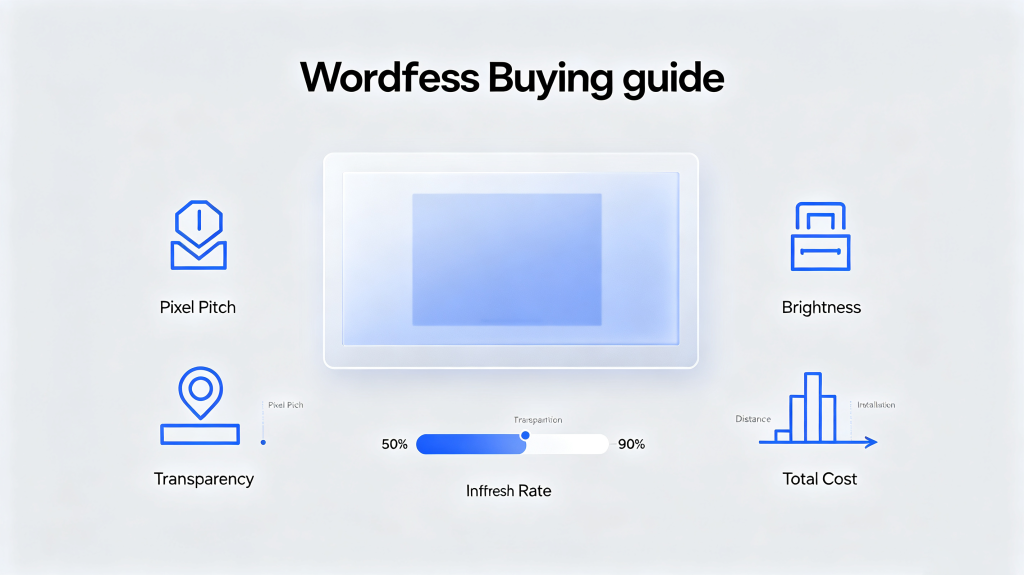
Pixel pitch is the distance between two LED pixels. It is measured in millimeters. A smaller number means a sharper image.
Choose a display with a pixel pitch that matches your viewing distance. Closer viewers need a smaller pixel pitch. Distant viewers can use a larger pixel pitch.
Always check this spec first. It is the most important factor for image quality.
Brightness
Brightness is measured in nits. A higher nit number means a brighter display.
For storefront windows, aim for at least 4,000 to 6,000 nits. This ensures visibility in daylight. Indoor installations may need lower brightness.
If the brightness is too low, your content will be invisible in sunlight. Check this spec before buying.
Resolution
Resolution determines how sharp your content looks. It is calculated by the number of pixels. More pixels mean a sharper image.
Balance resolution with viewing distance. Common resolutions include 1920×1080 (Full HD) and 3840×2160 (4K).
Refresh Rate
The refresh rate affects how smooth motion looks. It is measured in hertz (Hz). Higher is better.
Choose at least 3,840 Hz for video content. Low refresh rates cause flickering on camera.
Transparency Level
Transparency level is what makes this display unique. It is measured as a percentage.
A higher transparency means more light passes through. Common models offer 50% to 90% transparency.
Choose based on your visibility needs. Higher transparency means less image detail. Lower transparency means sharper images.
Installation Method
Installation methods vary for different models.
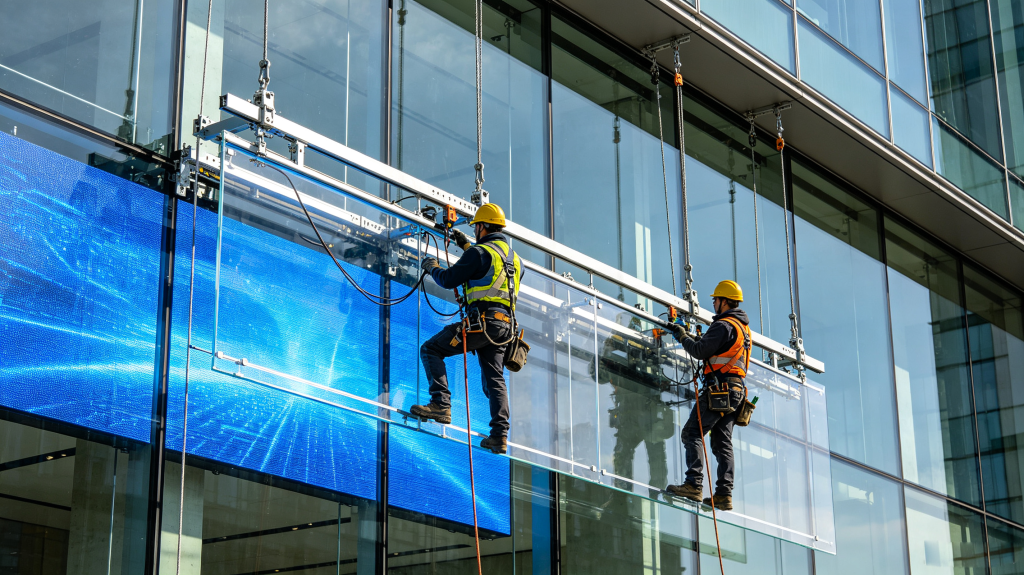
Hang-and-play is the simplest method. The display hangs from the ceiling. No structural support is needed.
Frameless mounting is another option. It attaches directly to glass surfaces.
Consider your space before choosing an installation method.
Total Cost
The display panels themselves are only part of the cost. Structure and mounting hardware add to it. Power supply units are needed. Installation labor can be significant.
A complete project often costs more than traditional displays. Ask for a full itemized quote.
Common Transparent LED Screen Display Applications
This display technology is used in many industries. Here are the most common uses.
Retail stores use these displays for storefront windows. Shoppers can see products inside while watching advertisements. This creates a unique shopping experience.
Shopping malls install these panels in glass facades. Corporate offices use them for lobby displays. Museums use this technology for interactive exhibits.
Transparent LED Screen Display FAQs
Q: How long does a transparent LED screen display last?
A: Quality units last about 100,000 hours. That is roughly 11 years at 24 hours per day. Most businesses run them 8 to 12 hours daily.
Q: What is the best transparency level?
A: It depends on your needs. For maximum visibility, choose 80% to 90% transparency. For sharper images, choose 50% to 60% transparency.
Q: Can a transparent LED screen display be used outdoors?
A: Yes, some models are designed for outdoor use. Look for high brightness and weatherproof ratings. Indoor models are not suitable for outdoor installation.
Q: How do you control the content?
A: Through control software. You upload content and schedule playback. Some systems support real-time updates.
Final Thoughts on Transparent LED Screen Display
The transparent LED screen display market is growing fast. Technology improves. Prices fall. Now is a great time to invest.
Whether you need a retail storefront display or a corporate lobby installation, preparation is key. Know your needs. Know your options. Choose a supplier you can trust.
A well-chosen display can transform any space. It attracts attention. It boosts your brand. Take your time. Make an informed choice.
Related Reading:
– [[P3产品页文案]] — Explore our Transparent LED Screen Display product specs
– [LED display on Wikipedia]— Learn the technical background of LED display technology