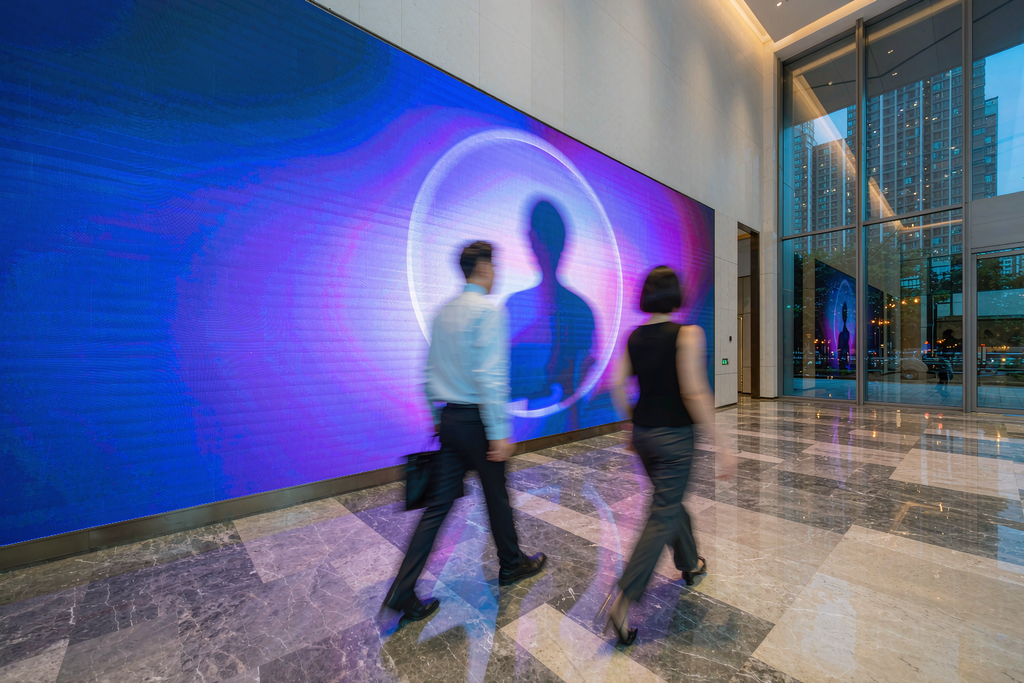
Why Wall Screen LED Technology Is Reshaping Commercial Spaces
Across retail stores, conference rooms, control centers, and corporate lobbies, a major shift is underway. A wall screen led has become the standard choice for organizations that need a fixed large-format display with professional-grade image quality.
The global LED display market continues to expand at a steady pace. Industry analysts project the market will surpass 30 billion USD by 2028. This growth is driven by demand in advertising, corporate communications, and immersive brand experiences. As one of the most versatile product categories in this space, wall screen led technology now serves everything from flagship retail installations to mission-critical control rooms.
For commercial buyers, AV integrators, and project managers, understanding what makes this technology different is essential before committing to a major purchase. Here are 7 reasons why wall screen led installations are becoming the new commercial standard in 2026.
1. Superior Image Quality That Competes With Premium TVs
Traditional video walls used multiple LCD panels stacked side by side. The thick bezels between screens created visible black lines across the picture. The color and brightness often drifted from one panel to the next, breaking the visual experience.
A wall screen led eliminates both problems. Each cabinet is calibrated at the factory, so color and brightness stay consistent across the entire wall. Bezel-less splicing keeps the image continuous, with gaps of less than 0.5mm between cabinets. The result looks like a single large display rather than a grid of smaller panels.
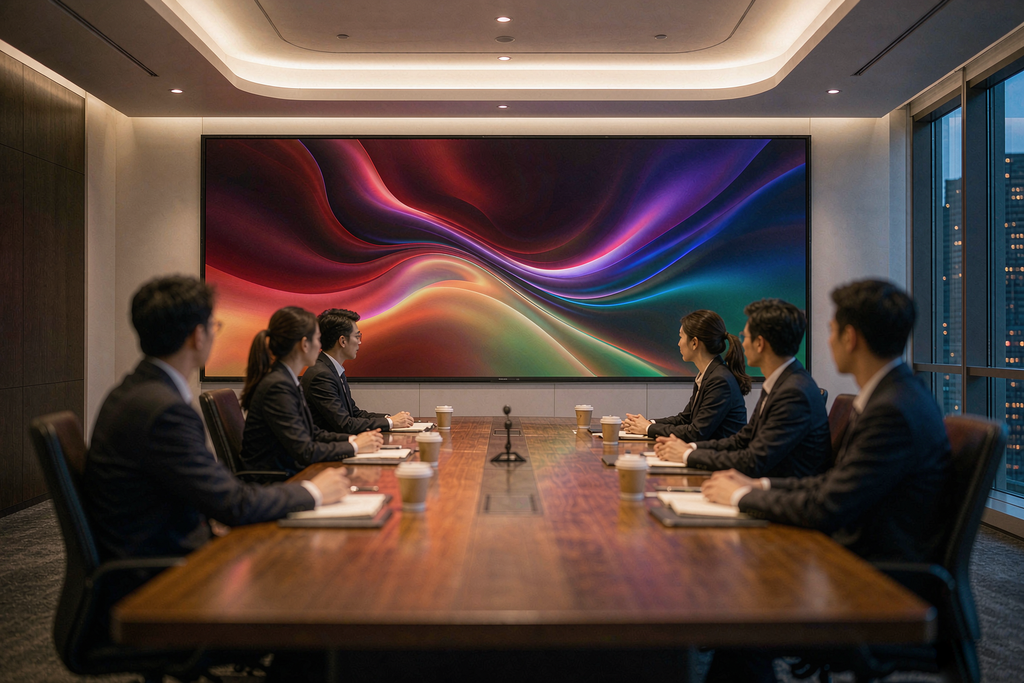
For boardroom presentations, retail advertising, and broadcast applications, this consistency directly improves the way the content is perceived.
2. Brightness Levels for Any Environment
Conference rooms can be dimly lit. Retail stores can be flooded with daylight. Control rooms can have mixed artificial lighting. A single display technology rarely handles all of these conditions well.
A wall screen led solves this with a broad brightness range. Indoor models deliver 600 to 1500 nits, which is comfortable for close-up viewing. Window-facing models can reach 2500 to 5000 nits, which keeps content readable in direct sunlight. The same product family can serve very different environments simply by selecting the right brightness tier.
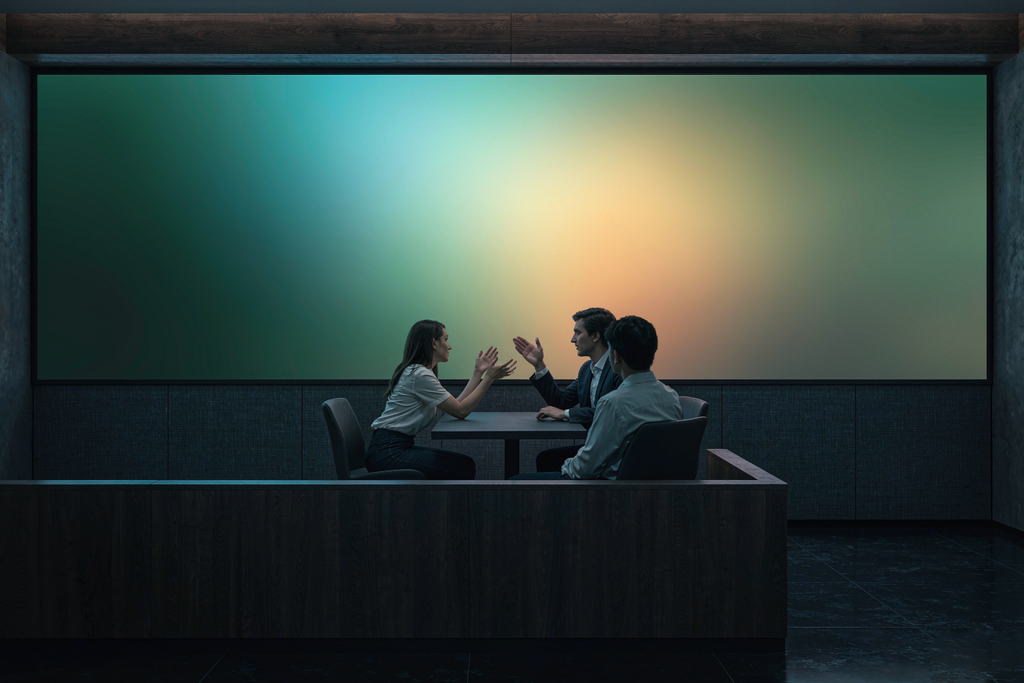
For buyers managing multiple sites, this scalability simplifies procurement and standardization.
3. Modular Design for Any Size or Shape
Every commercial space is different. A small huddle room might need a 2-meter wide display. A flagship retail store might want a 10-meter wide feature. A control room might use a 6-meter wide curved wall. A boardroom might use a 16:9 aspect ratio display that replaces a traditional projector screen.
A wall screen led is built from modular cabinets that combine into virtually any size, aspect ratio, or shape. This makes the technology suitable for standard installations and creative architectural features alike. Curved walls, L-shaped displays, and even ceiling-hung installations are all possible.
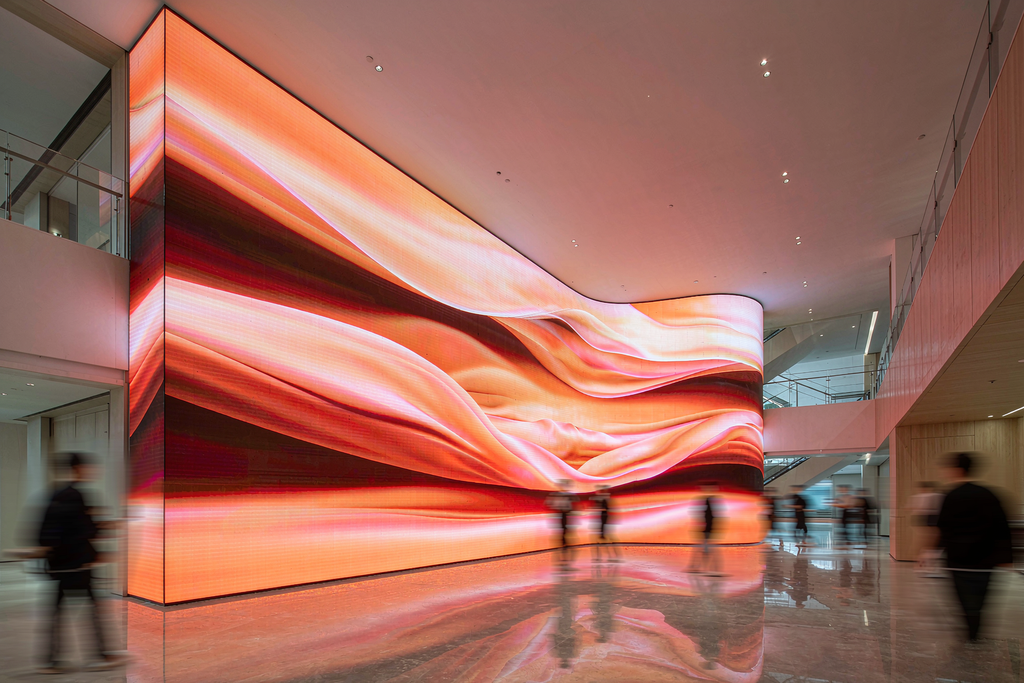
For AV integrators, this flexibility removes a long-standing limitation of projector-based systems.
4. Long Lifespan and Predictable Maintenance
Projectors need lamp replacements every few years. The cost of the lamp, the labor for replacement, and the downtime during service all add up. For organizations running displays 12 to 18 hours a day, this becomes a significant ongoing expense.
A wall screen led is rated for 100,000 hours of use, with no lamps and few moving parts. For a typical commercial installation, that translates to 10 to 15 years of normal daily use before any major component replacement. When service is needed, modular cabinets can be swapped in minutes by a trained technician.
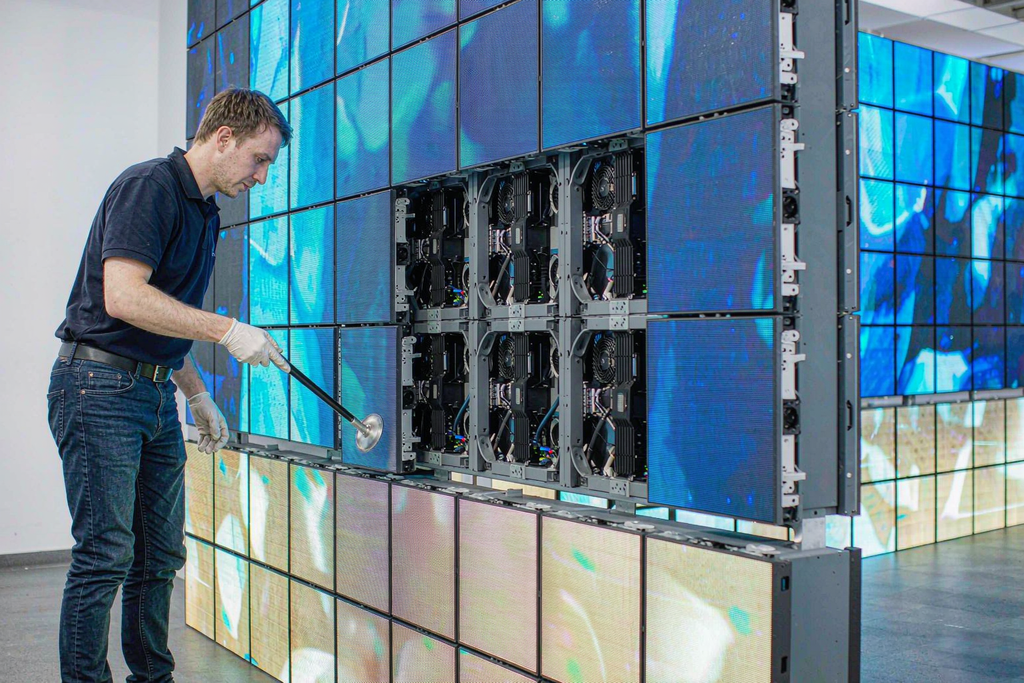
For CFOs and operations managers, this predictable maintenance profile makes budgeting far easier than with older display technologies.
5. Smart Control and Centralized Management
Modern wall screen led systems come with intelligent control platforms. Operators can:
- Adjust brightness and color across the entire wall
- Switch between multiple input sources
- Monitor panel health in real time
- Diagnose issues before they cause downtime
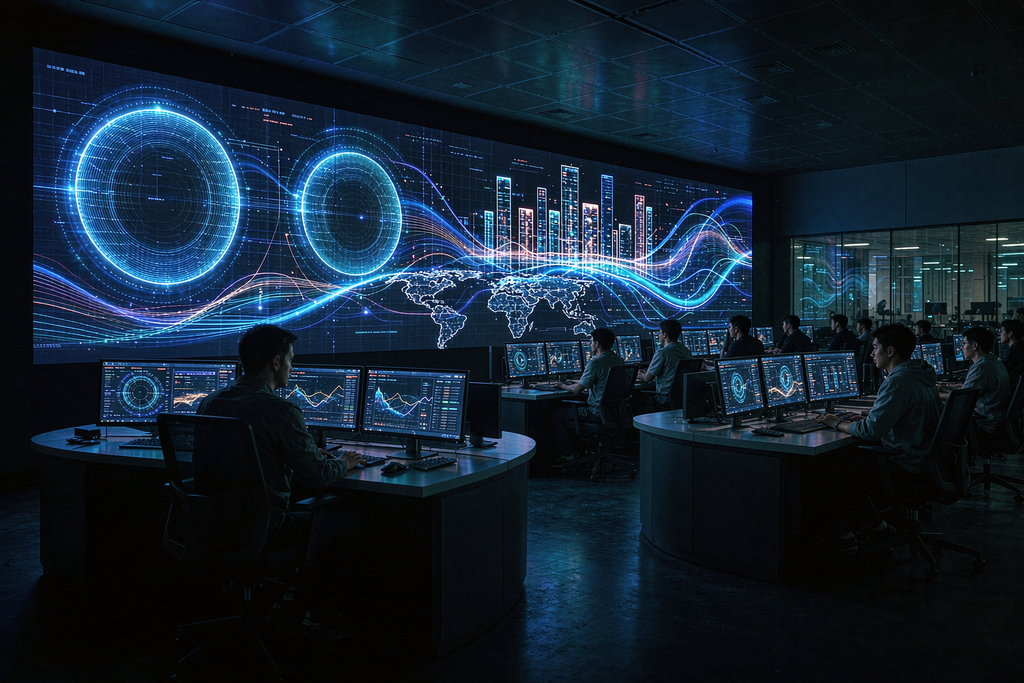
Cloud-based control platforms are now standard. A retail chain can update every store display from a single dashboard. A corporate communications team can push a new message to every office lobby simultaneously. This kind of centralized control was difficult or impossible with older display technologies.
For multi-site organizations, this operational efficiency is often the deciding factor in choosing wall screen led over competing options.
6. Wide Range of Pixel Pitches for Any Viewing Distance
Different viewing distances call for different pixel pitches. A wall screen led product line typically covers P0.9 to P10, allowing the same technology to serve very different use cases:
- P0.9 to P1.5 for boardrooms, broadcast, and close-up retail
- P1.8 to P2.5 for conference rooms and mid-size retail
- P3 to P5 for large retail, transport hubs, and lobby displays
- P6 to P10 for outdoor and long-distance viewing
This range means that buyers do not need to choose a different technology for different projects. The same wall screen led family covers the full spectrum, simplifying vendor management and training.
7. Strong ROI and Lower Total Cost of Ownership
The business case for a wall screen led is straightforward. The initial investment is offset by:
- Lower maintenance and service costs over the product life
- Reduced printing and signage replacement costs for retail users
- Improved advertising effectiveness in commercial spaces
- Longer useful life than competing display technologies
For many commercial installations, the wall screen led pays back its premium over competing technologies within 3 to 5 years. After that, the savings continue to accumulate. For organizations that operate displays for a decade or more, the lifetime cost of ownership is often 30 to 50 percent lower than projector-based systems.
Final Thoughts
A wall screen led stands out for image quality, brightness range, modular flexibility, predictable maintenance, smart control, broad pixel pitch coverage, and strong long-term ROI. Whether you are an AV integrator, retail brand, corporate buyer, or project manager, focusing on these 7 features will help you pick the right product for your next installation.
As the display industry continues to evolve, the demand for high-quality LED solutions will only grow. By choosing a proven product line and a trusted supplier, you can deliver projects that meet both performance expectations and budget goals. Take the time to compare specifications, request samples, and verify after-sales commitments before you finalize your decision.
If you want to learn more about LED display technology and its history, you can read the LED display article on Wikipedia.
To explore our full range of wall screen led solutions for commercial and corporate projects, visit our Wall Screen LED Solutions.