A Practical Guide to Choosing the Right Flexible LED Display
Are you looking for a flexible LED display? You are not alone. More businesses are choosing this display technology every year. But picking the right product can feel confusing. This guide makes it simple.
In this article, you will learn 7 key things. These will help you make a smart buying decision.
What Is a Flexible LED Display?
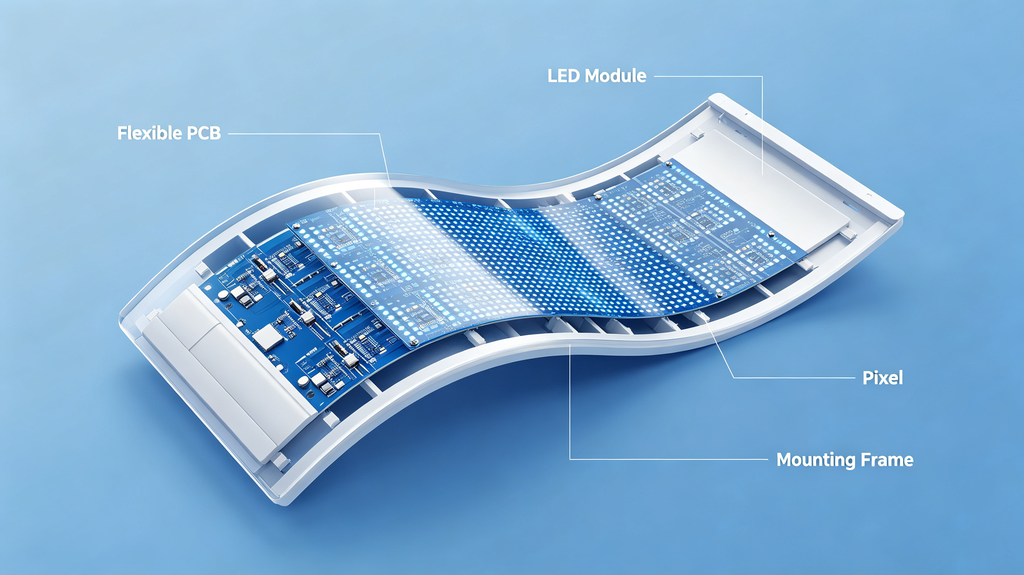
This display bends to fit curved surfaces. Unlike traditional flat panels, it uses flexible printed circuit boards. This allows installation on walls, columns, and irregular shapes.
A flexible LED display is built with LED modules on flexible substrates. Each module contains hundreds of LEDs. They work together to produce vivid, bright content on curved surfaces.
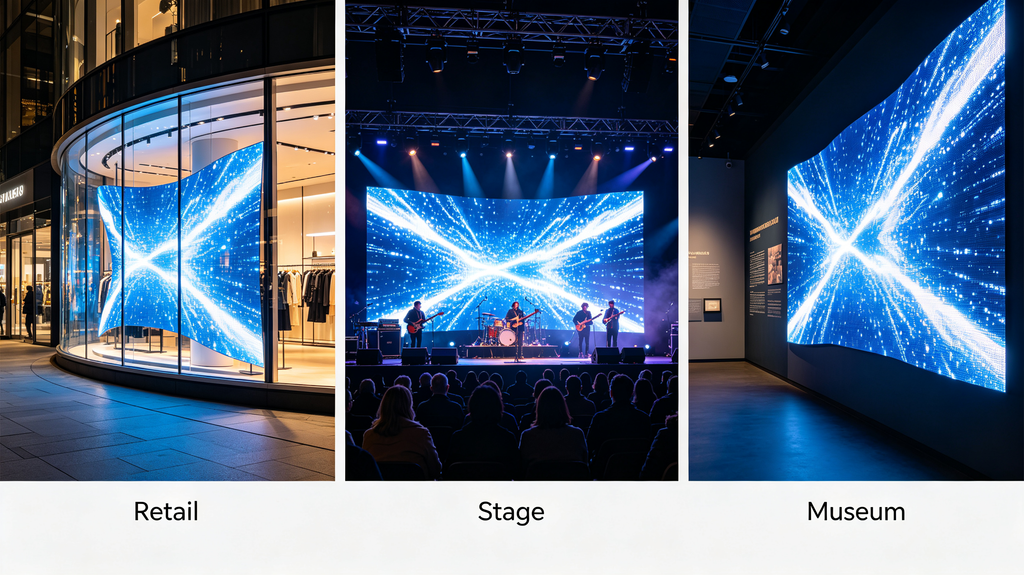
This technology opens new possibilities for creative installations. Retail stores, stages, and museums all benefit from this flexibility.
7 Key Things About Flexible LED Display Before Buying
Pixel Pitch
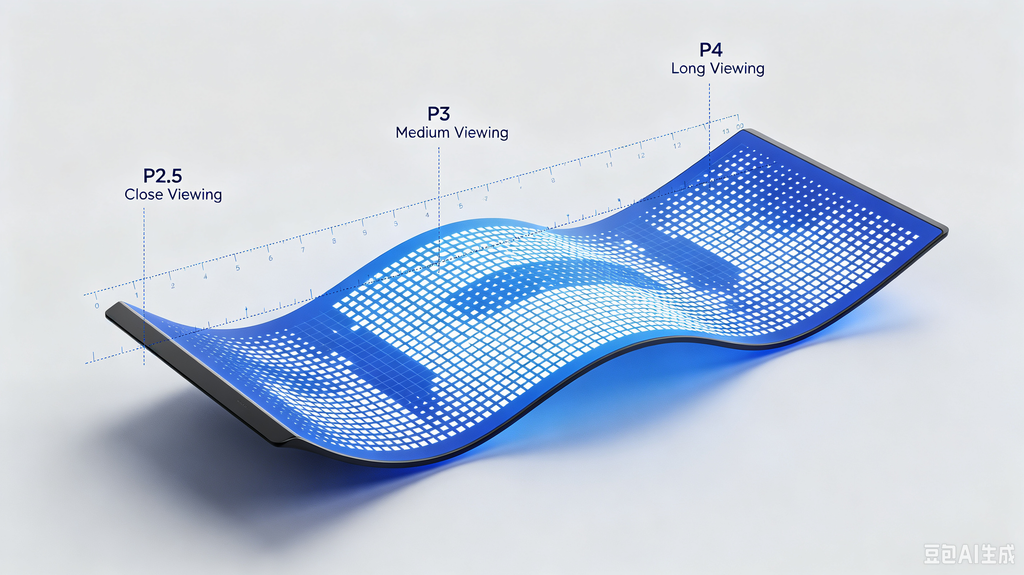
Pixel pitch is the distance between two pixels. It is measured in millimeters. A smaller number means a sharper image.
Choose a pixel pitch that matches your viewing distance. Closer viewers need a smaller pixel pitch. Distant viewers can use a larger pixel pitch.
Always check this spec first. It is the most important factor for image quality.
Brightness
Brightness is measured in nits. A higher nit number means a brighter display.
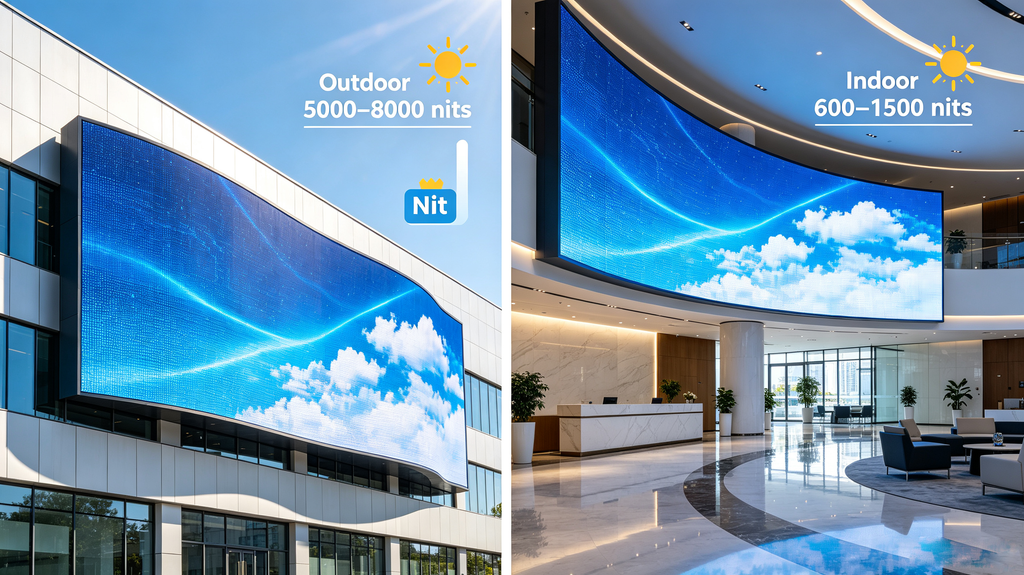
For indoor use, 600 to 1,500 nits is sufficient. For outdoor use, choose at least 5,000 to 8,000 nits.
If the brightness is too low, your content will be invisible. Check this spec before buying.
Resolution
Resolution determines how sharp your content looks. It is based on the total number of pixels. More pixels mean a sharper image.
Balance resolution with viewing distance. Common resolutions include 1920×1080 (Full HD) and 3840×2160 (4K).
Curvature Radius
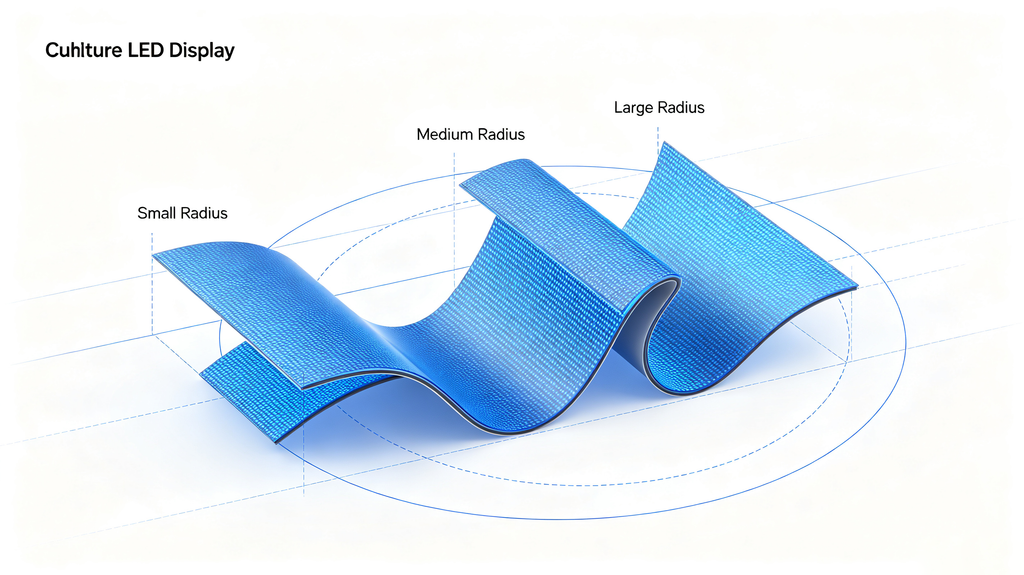
The curvature radius defines how much a flexible LED display can bend. It is measured in millimeters.
Smaller radius means tighter curves. Larger radius means gentler curves.
Choose a curvature radius that matches your installation surface. Always confirm the radius before buying.
Refresh Rate
The refresh rate affects how smooth motion looks. It is measured in hertz (Hz). Higher is better.
Choose at least 3,840 Hz for video content. Low refresh rates cause flickering on camera.
Installation Surface
Measure the radius of your installation surface. Compare it with the product specifications.
Some surfaces are too curved for standard panels. Custom solutions may be needed for extreme curves.
Durability
Durability matters for long-term use. Quality units last about 100,000 hours.
Modular design makes maintenance simple. Check the warranty before buying. Most quality suppliers offer 2 to 3 years warranty.
Common Flexible LED Display Applications
This technology is used in many industries. Here are the most common applications.
Retail stores use flexible LED display for curved window displays. Stages and concerts use them for curved backdrops.
Broadcasting studios use them for curved set designs. Museums use them for interactive exhibits.
Sports venues and transportation hubs use them for information boards. Any business that wants creative visual impact can benefit.
Flexible LED Display FAQs
Q: What surfaces can a flexible LED display be installed on?
A: Curved walls, columns, pillars, and irregular shapes. The curvature radius must match the product specifications.
Q: How sharp is the image quality?
A: Image quality depends on pixel pitch. A smaller pixel pitch delivers a sharper image. The flexible substrate does not reduce image quality.
Q: Can it be used outdoors?
A: Yes, outdoor models are available. Choose at least IP65 rating and 5,000 nits brightness.
Q: How do I install it on a curved surface?
A: Professional installation is recommended. The panels are mounted on a flexible frame that follows the surface curve.
Final Thoughts on Flexible LED Display
The flexible LED display market is growing fast. Technology improves. Prices fall. Now is a great time to invest.
Know your surface radius. Check the pixel pitch and brightness. Choose a supplier who offers good support.
A well-chosen flexible LED display transforms any space. It attracts attention. It boosts your brand.
Related Reading:
– [[P3产品页文案]] — Explore our P3 outdoor LED display product specs
– [LED display on Wikipedia]— Learn the technical background of LED display technology