Why Poster LED Display Technology Is Going Mainstream
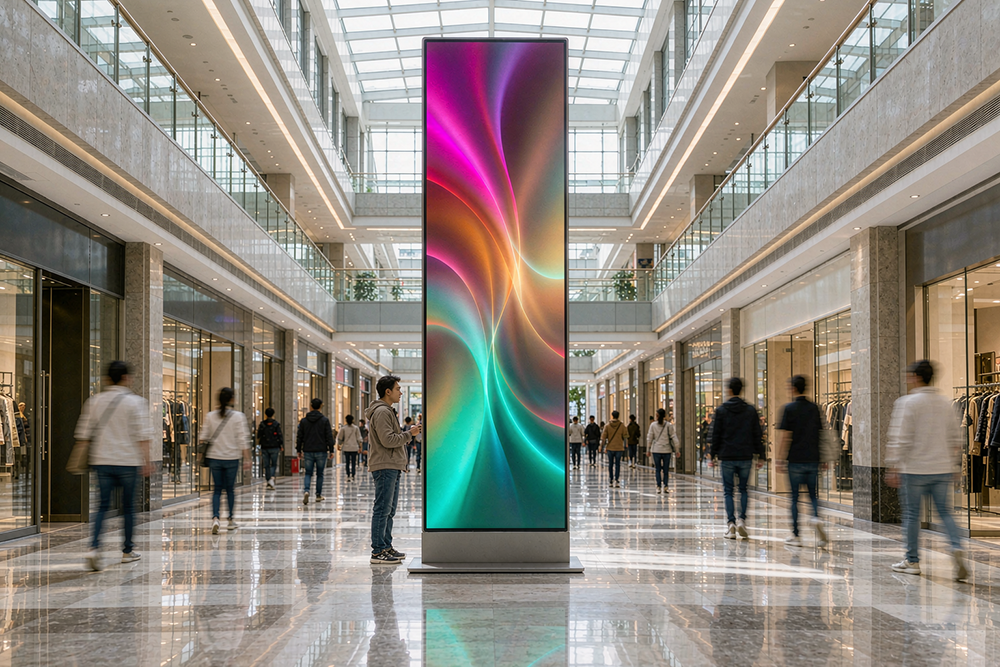
Walk through any shopping mall, airport, retail store, or trade show in 2026 and you will see the same shift. Static printed posters are being replaced by poster led display screens. The change is happening for a clear reason: a digital poster can be updated in seconds, attracts more attention, and pays for itself within months through reduced printing costs.
A poster led display is a self-contained digital screen designed to look and behave like a traditional printed poster, but with all the advantages of LED technology. It is slim, lightweight, easy to move, and ready to display any content the operator wants.
For retail stores, marketing teams, event organizers, and commercial property operators, this technology is no longer experimental. Here are 7 reasons why poster led display installations are accelerating in 2026.
1. Instant Content Updates Without Printing Costs
Traditional printed posters require a print run for every change. A new promotion. A new product. A holiday message. Each update costs money, takes time, and creates waste.
A poster led display lets you update content in seconds from a computer or mobile phone. New images, new videos, new animations can be pushed to the screen without anyone touching the hardware. For multi-location businesses, this means the same content can be updated across hundreds of screens simultaneously.
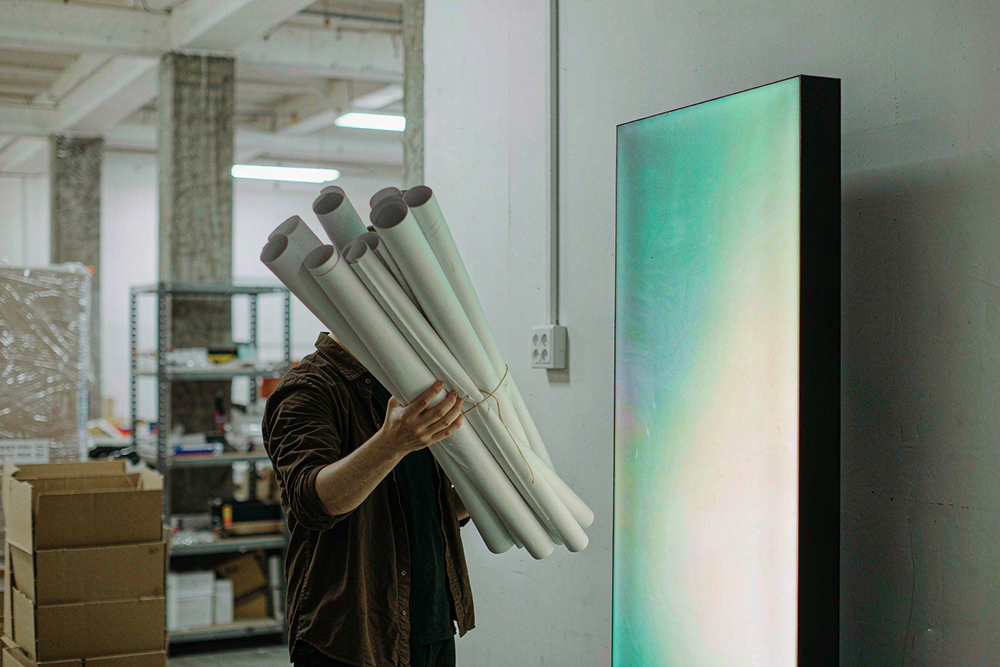
The savings on printing costs alone typically pay for the screen within 6 to 12 months.
2. Eye-Catching Motion and Animation
The human eye is wired to detect motion before it processes anything else. Research consistently shows that moving displays attract more attention and improve message retention compared to static posters.
A poster led display can scroll text, animate logos, flash promotional messages, transition between scenes, and play short video clips. The same screen can run dozens of different messages throughout the day. A retail store can show breakfast promotions in the morning, lunch specials at noon, and dinner deals in the evening automatically.
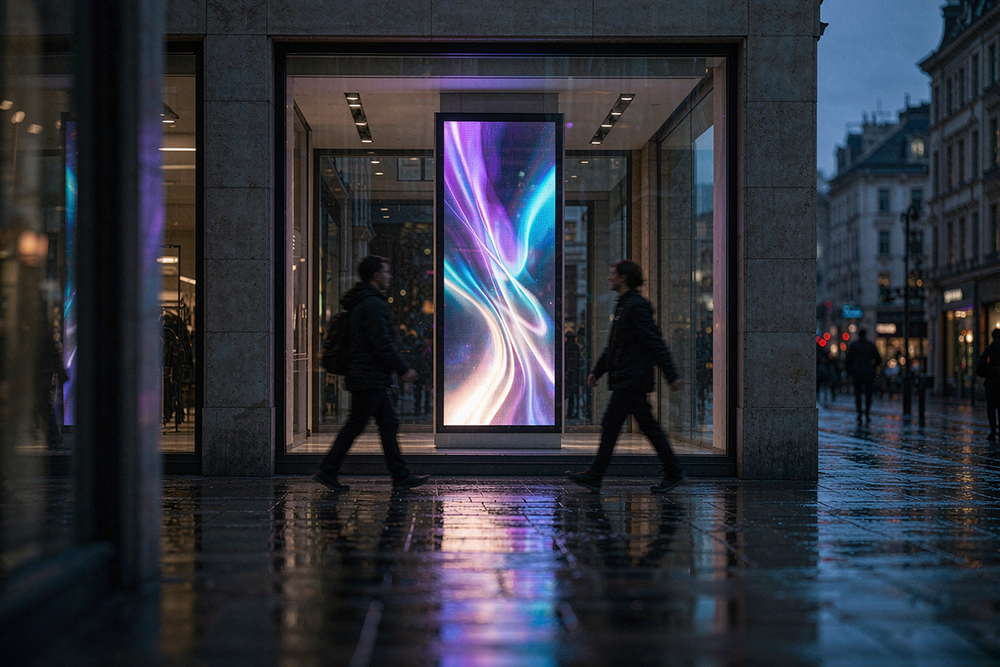
This motion advantage directly translates into more foot traffic, longer viewing time, and higher conversion for storefronts.
3. High Brightness for Any Lighting Environment
Storefront windows face direct sunlight during the day and artificial lighting at night. A printed poster can look washed out in daylight and disappear entirely after sunset.
A poster led display delivers brightness levels from 1500 to 4000 nits or more, depending on the model. The image stays vivid and readable even in direct sunlight. At night, brightness can be automatically dimmed to a comfortable level without losing visibility.
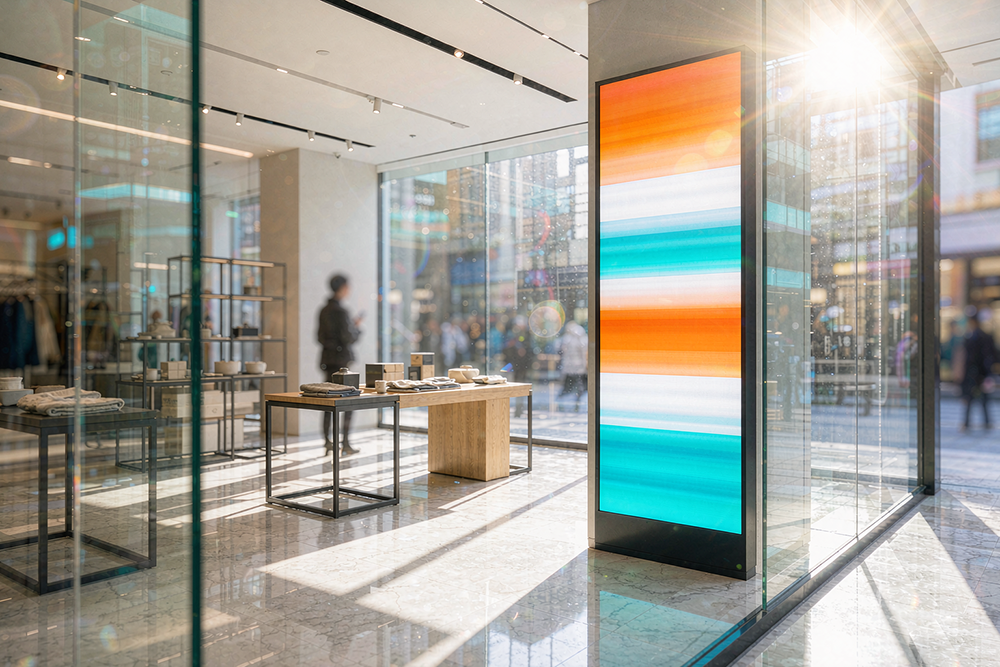
For retail stores on busy commercial streets, this brightness advantage directly improves visibility and customer recall.
4. Slim and Portable Design
One of the biggest advantages of a poster led display over a traditional LED wall is its form factor. These screens are designed to look like a freestanding poster. They are slim, often less than 40mm thick, and they sit on a small base or hang on a wall mount.
Many models come with wheels on the base, so the screen can be moved from one location to another without any tools. This makes them perfect for retail chains that change window displays frequently, trade shows, and pop-up events.
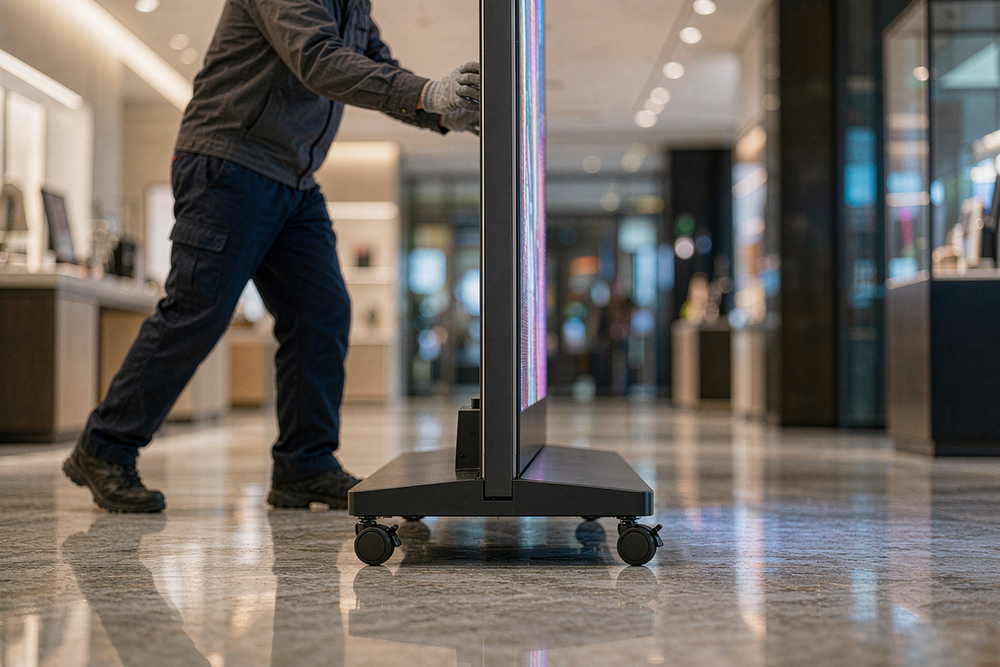
For businesses that need flexibility, the portable design of a poster led display is unmatched by any competing technology.
5. Plug-and-Play Setup
Traditional LED walls require professional installation. Cabling, signal configuration, structural mounting, and system calibration all need to be done by trained technicians.
A poster led display is designed for plug-and-play. Unbox it, plug in the power, turn it on, and the screen is ready to display content. The internal media player is built in, and most models ship with simple software that lets non-technical staff create and schedule content.
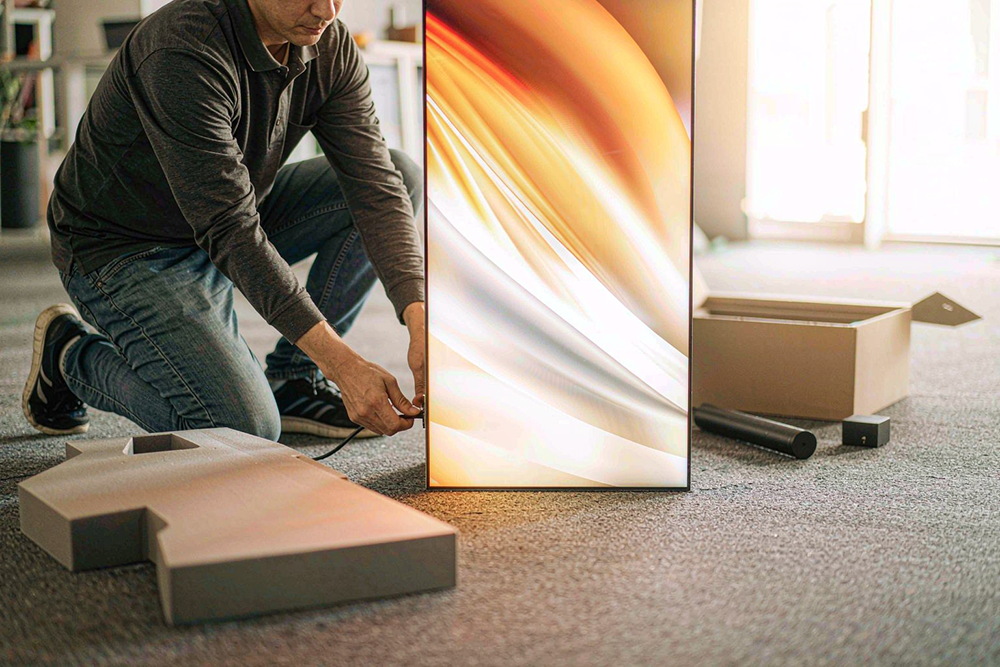
For small business owners without a dedicated AV team, this ease of use removes the biggest obstacle to digital signage adoption. The screen can be running in minutes after delivery.
6. Wide Range of Sizes and Configurations
Every business has different needs. A small boutique might need a compact 50cm wide poster screen. A retail chain might want a 1-meter wide display for each store window. A trade show exhibitor might want a 2-meter wide screen for the booth.
Poster led display products come in standard sizes from 50cm to 2 meters wide, with various aspect ratios and resolutions. Single-screen, multi-screen mirror, and multi-screen joined configurations are all available. Some models support touch interaction for retail and wayfinding applications.
This flexibility means that any business can find a configuration that fits its space, budget, and content needs.
7. Strong ROI and Long-Term Value
The business case for a poster led display is straightforward. The hardware pays for itself through:
- Reduced printing costs over the product life
- More effective promotions leading to higher sales
- Lower labor costs for manual poster changes
- Stronger brand visibility in competitive locations
For a typical retail store, the screen often pays for itself within 6 to 18 months. After the payback period, the screen continues to deliver value with very low ongoing costs. The lifespan of 50,000 to 100,000 hours means the hardware typically lasts 10+ years of normal daily use.
For multi-location businesses, the ROI scales further. Centralized management, brand consistency, and instant updates across hundreds of locations create operational efficiency that no printed poster approach can deliver.
Final Thoughts
A poster led display is no longer a luxury reserved for flagship retail stores. As costs have come down and software has become easier to use, small shops, restaurants, salons, and service businesses are all making the switch. The benefits are clear: instant content updates, eye-catching motion, high brightness, slim portable design, plug-and-play setup, flexible sizing, and a strong return on investment.
When planning an upgrade, take time to evaluate your storefront size, viewing distance, typical content, and budget. Work with a supplier who understands both the technical specifications and the practical demands of running a busy commercial location. The right partner will guide you through screen selection, software setup, and long-term service.
If you want to learn more about the underlying LED display technology, you can read the LED display article on Wikipedia.
To explore our full range of poster led display solutions for retail and commercial projects, visit our Poster LED Display Solutions.